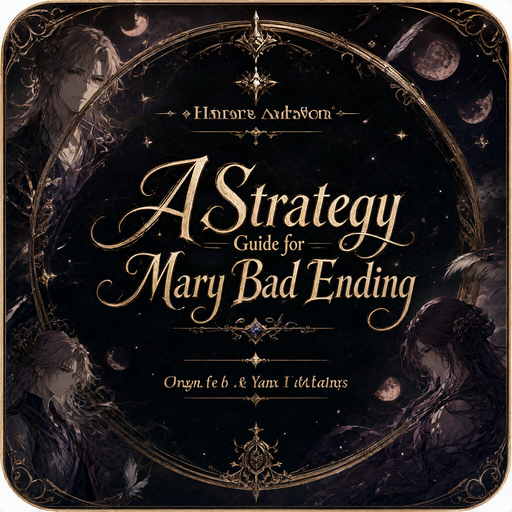
A Strategy Guide for a Mary Bad Ending Levels: Story Progression, Romance Routes, and Chapter Walkthrough
If you are searching for A Strategy Guide for a Mary Bad Ending levels, you may want to understand how the mysterious dating simulation progresses, which...
If you are searching for A Strategy Guide for a Mary Bad Ending levels, you may want to understand how the mysterious dating simulation progresses, which story stages introduce important characters, how romantic choices influence relationships, and what challenges could lead to different endings.
A Strategy Guide for a Mary Bad Ending, alternatively known as Strategy Guide for a Merry Bad Ending, is a Korean romance fantasy manhwa adapted from a web novel by Pretia, with artwork by KANG Seah. Its story follows Seo Jia as she becomes involved in a mysterious virtual dating simulation set in an ancient Hittite-inspired kingdom.
Unlike traditional video games, the series does not feature playable numbered levels, experience points, or conventional level-clearing mechanics. Instead, progression occurs through narrative developments, character interactions, mysteries, and romantic conflicts.
This walkthrough organizes the fictional simulation into conceptual story stages to help readers understand its progression without presenting speculative gameplay mechanics as confirmed features.
A Strategy Guide for a Mary Bad Ending Levels Overview
The mysterious dating simulation provides the central framework for Seo Jia's adventure. Rather than defeating enemies or completing platforming challenges, progression revolves around understanding unfamiliar circumstances, navigating relationships, and recognizing potential dangers.
The following stages represent a suggested framework for understanding the story rather than officially designated levels.
| Story Stage | Main Focus | Progression Objective |
|---|---|---|
| Stage 1 | Simulation Introduction | Understand the initial situation |
| Stage 2 | Kingdom Exploration | Discover the unfamiliar setting |
| Stage 3 | Character Encounters | Understand important relationships |
| Stage 4 | Romantic Development | Analyze emotional connections |
| Stage 5 | Hidden Conflicts | Recognize potential dangers |
| Stage 6 | Major Decisions | Evaluate important choices |
| Stage 7 | Ending Analysis | Understand possible narrative outcomes |
These stages do not correspond directly to individual chapters. Multiple chapters may explore similar themes, while important developments can occur simultaneously.
Readers should also remember that the manhwa is an ongoing narrative rather than an interactive experience where individual players can select and replay levels.
Early Levels Walkthrough: Entering the Dating Simulation
The opening stages establish the central premise of A Strategy Guide for a Mary Bad Ending and introduce the circumstances surrounding Seo Jia's unusual adventure.
Stage 1: Understanding the Simulation
The first conceptual level focuses on understanding the mysterious virtual dating simulation.
Readers should pay particular attention to:
- Seo Jia's initial circumstances.
- The relationship between reality and the fictional simulation.
- The apparent purpose of the dating experience.
- Unusual information revealed through dialogue.
- Potential mysteries surrounding the fantasy world.
The introductory developments provide essential context for interpreting later character interactions.
Avoid assuming that the simulation follows conventional dating game rules. Mechanics such as affection meters, save points, character statistics, and inventory systems should only be considered established if explicitly revealed in the story.
Stage 2: Exploring the Ancient Kingdom
The next conceptual stage involves becoming familiar with the ancient Hittite-inspired setting.
Understanding the kingdom's social environment can help readers interpret character motivations and potential conflicts.
Important elements to follow include:
- Social hierarchies.
- Political relationships.
- Cultural expectations.
- Character backgrounds.
- Restrictions affecting personal decisions.
Unlike an open-world RPG, the setting is explored through the narrative. There is no confirmed interactive map, fast-travel system, or independently accessible exploration mode.
Stage 3: Meeting Important Characters
Character encounters form an essential part of romantic fantasy progression.
When a new character appears, consider their apparent intentions, relationships with other characters, and potential influence on Seo Jia's circumstances.
First impressions may not reveal a character's complete motivations. Later conversations can provide information that changes how earlier encounters should be interpreted.
Intermediate Levels: Romance Routes, Relationships, and Choices
The intermediate stages focus on the emotional and interpersonal elements that make the fictional dating simulation compelling.
Traditional dating games often feature clearly separated romance routes. However, A Strategy Guide for a Mary Bad Ending should not be assumed to contain a confirmed branching route system simply because its story incorporates a dating simulation.
Stage 4: Developing Relationships
Relationship development can provide important clues about the direction of the narrative.
Readers can organize character interactions using the following categories.
| Relationship Element | What to Examine |
|---|---|
| Trust | Whether characters behave consistently |
| Motivation | Why characters pursue particular objectives |
| Loyalty | Whether commitments remain reliable |
| Romantic Interest | How emotional connections develop |
| Conflict | What circumstances create tension |
| Secrets | Whether important information remains undisclosed |
These categories are analytical tools, not confirmed in-game statistics.
Following relationship changes across multiple chapters can help readers recognize patterns that might otherwise be overlooked.
Stage 5: Recognizing Hidden Conflicts
As relationships become more complicated, readers should examine potential conflicts between personal desires, social expectations, and individual motivations.
A seemingly positive interaction may carry additional implications when considered alongside previous events.
Useful reading strategies include comparing dialogue across chapters, remembering earlier promises, identifying contradictions, and distinguishing confirmed information from assumptions.
The title's reference to a bad ending also makes the relationship between romantic satisfaction and potentially unfavorable consequences particularly relevant.
However, specific ending requirements should not be treated as confirmed unless they are explicitly established within the published story.
Advanced Levels: Major Decisions and Ending Progression
The advanced conceptual levels concern important narrative decisions and the consequences that may emerge from complicated relationships.
Stage 6: Evaluating Major Choices
Choices are an important theme within the fictional dating simulation. Nevertheless, readers cannot directly control Seo Jia's decisions through an independently released game.
When analyzing an important decision, consider the following process:
- Identify the circumstances surrounding the decision.
- Examine the motivations of everyone involved.
- Review relevant information from previous chapters.
- Consider potential immediate and long-term consequences.
- Compare the expected outcome with subsequent developments.
This approach helps readers understand the significance of narrative turning points without relying on invented walkthrough instructions.
Stage 7: Understanding Potential Endings
The final conceptual stage focuses on interpreting the story's potential resolution.
Romance fantasy narratives may explore happiness, tragedy, sacrifice, emotional conflict, or morally ambiguous outcomes.
A merry bad ending generally describes an outcome that combines apparent happiness with unfavorable, disturbing, or tragic circumstances. Different characters may interpret the same outcome differently.
This concept can help readers understand the thematic implications of the title, but it does not establish a confirmed list of endings for the series.
There is currently no verified ending-selection menu, ending achievement system, or New Game Plus feature associated with a playable adaptation.
How to Track Your Progress
Because the series uses chapters rather than playable levels, chapter-based tracking is the most reliable progression method.
Keep track of completed chapters, significant character encounters, relationship changes, unresolved mysteries, and important narrative revelations.
Avoid unofficial level lists that claim to provide exact unlock requirements, numerical affection thresholds, or guaranteed ending combinations without supporting evidence.
For newly released chapters, follow the official RIDI publication listing rather than relying exclusively on speculative community walkthroughs.
Frequently Asked Questions
How many levels are in A Strategy Guide for a Mary Bad Ending?
There is no confirmed number of playable levels because A Strategy Guide for a Mary Bad Ending is a manhwa rather than a released video game. The seven conceptual stages described in this guide provide an unofficial framework for understanding narrative progression.
How do you unlock new levels in A Strategy Guide for a Mary Bad Ending?
There are no confirmed gameplay-based level unlock requirements. Progression occurs by reading subsequent published chapters and following developments involving Seo Jia, the mysterious dating simulation, and its characters.
Are there secret levels or multiple ending routes in A Strategy Guide for a Mary Bad Ending?
No independently playable secret levels or selectable ending routes have been verified. Although the fictional simulation and romantic fantasy premise make alternative outcomes an interesting topic for analysis, specific secret routes, unlock conditions, and ending requirements remain unconfirmed unless explicitly revealed in the published story.