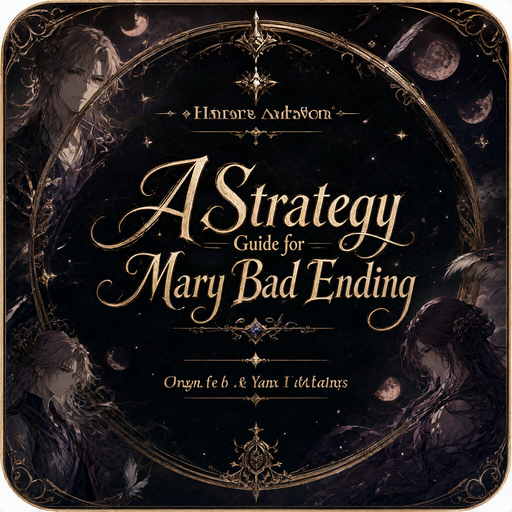
A Strategy Guide for a Mary Bad Ending Tips and Tricks: Best Choices, Romance Routes, and Ending Strategies
Looking for the best A Strategy Guide for a Mary Bad Ending tips and tricks? Understanding the mysterious dating simulation, recognizing hidden intentions,...
Looking for the best A Strategy Guide for a Mary Bad Ending tips and tricks? Understanding the mysterious dating simulation, recognizing hidden intentions, analyzing character relationships, and identifying potentially dangerous choices are essential to following Seo Jia's journey through an unfamiliar fantasy kingdom.
A Strategy Guide for a Mary Bad Ending, alternatively known as Strategy Guide for a Merry Bad Ending, is a Korean romance fantasy manhwa adapted from a web novel by Pretia, with artwork by KANG Seah. Its story centers on a mysterious virtual dating simulation set in an ancient Hittite-inspired kingdom.
Although the dating simulation plays a central role in the narrative, the series is not a commercially released video game. The following strategies explain its fictional gameplay concepts and provide practical ways to understand character routes, story decisions, hidden clues, and possible endings without inventing playable mechanics.
1. Best Beginner Tips for Understanding the Dating Simulation
The most important aspect of A Strategy Guide for a Mary Bad Ending is understanding the relationship between romantic decisions, character motivations, and narrative consequences.
Unlike conventional dating simulations, where players might simply select favorable dialogue options, the fictional setting presents a more complicated relationship between romance, personal intentions, and potential danger.
Here are the best beginner strategies for following the story:
- Pay attention to the circumstances surrounding Seo Jia's introduction to the simulation.
- Remember important character names and their relationships.
- Analyze dialogue for hidden intentions and conflicting motivations.
- Observe how characters behave when circumstances change.
- Avoid assuming that every romantic interaction leads toward a happy ending.
- Keep track of unexplained events and recurring mysteries.
- Consider how earlier decisions might influence later developments.
Understanding the story's underlying rules is more valuable than attempting to predict every romantic outcome immediately.
Important Elements to Follow
| Story Element | Recommended Strategy | Priority |
|---|---|---|
| Character relationships | Track changes in trust and behavior | Very High |
| Dialogue | Identify hidden meanings | Very High |
| Story choices | Consider possible consequences | High |
| Kingdom background | Understand political and social relationships | High |
| Hidden mysteries | Record recurring clues | High |
| Romantic encounters | Evaluate long-term implications | Medium |
These priorities represent recommended reading strategies rather than an officially confirmed gameplay ranking system.
2. How to Analyze Romance Routes and Make Better Choices
Romance routes are among the most interesting concepts associated with A Strategy Guide for a Mary Bad Ending. However, readers should distinguish between the fictional dating simulation and a playable game with selectable routes.
When analyzing Seo Jia's decisions, consider how each interaction could influence her relationships and circumstances.
Prioritize Understanding Before Romance
A character who appears friendly may have motivations that are not immediately obvious. Similarly, a character who initially appears distant or intimidating may become more understandable as additional information is revealed.
Instead of judging characters exclusively by their romantic appeal, examine their actions, responsibilities, and personal objectives.
Important questions include:
- Does the character consistently respect Seo Jia's decisions?
- Are their statements supported by their actions?
- Does the relationship increase or reduce potential danger?
- Is important information being deliberately concealed?
- Could a romantic decision create conflict elsewhere?
These questions can help readers evaluate possible relationship developments without relying on unsupported assumptions about affection points or hidden statistics.
Compare Short-Term and Long-Term Consequences
An immediately favorable interaction does not necessarily guarantee a desirable outcome. A decision that improves one relationship could potentially complicate another.
Consider the following hypothetical situations when interpreting the fictional simulation.
| Choice Type | Potential Narrative Benefit | Potential Narrative Risk |
|---|---|---|
| Accepting assistance | Builds cooperation | Creates dependency |
| Revealing information | Encourages trust | Exposes vulnerabilities |
| Refusing a request | Protects independence | Creates tension |
| Investigating a mystery | Reveals useful information | Attracts unwanted attention |
| Expressing affection | Strengthens emotional connections | Introduces complications |
These examples illustrate possible narrative consequences. They are not confirmed selectable options or documented outcomes from an actual game.
3. Tips for Discovering Secrets and Avoiding Bad Endings
The title A Strategy Guide for a Mary Bad Ending suggests that understanding undesirable outcomes may be just as important as pursuing romantic success.
Readers interested in discovering secrets should focus on narrative details that might become significant in later chapters.
Watch for Recurring Clues
Repeated phrases, unusual reactions, unexplained objects, and contradictions between characters can provide opportunities for deeper story analysis.
When something appears unusual, remember the context in which it occurs. Later chapters may reveal information that changes the meaning of an earlier scene.
Useful techniques include comparing dialogue across chapters, reviewing important conversations, and identifying inconsistencies between what characters claim and what they actually do.
Recognize Potential Warning Signs
Within the fictional dating simulation, seemingly positive developments should not automatically be interpreted as guaranteed progress toward a happy ending.
Possible narrative warning signs include concealed intentions, increasingly restrictive relationships, unresolved conflicts, conflicting explanations, and decisions made without sufficient information.
These are general interpretive signals rather than confirmed bad-ending triggers.
Understand the Merry Bad Ending Concept
A merry bad ending generally describes a fictional outcome that combines happiness from a character's perspective with circumstances that may appear tragic, unsettling, or undesirable from another perspective.
This distinction makes the concept particularly relevant when analyzing dark romance fantasy stories.
Rather than classifying every possible outcome as simply good or bad, consider whose perspective determines whether an ending is satisfactory. An emotionally fulfilling relationship for one character might involve sacrifices or consequences that complicate its overall meaning.
The exact ending structure of A Strategy Guide for a Mary Bad Ending should not be assumed until supported by the published story.
4. Advanced Tips for Tracking Story Progression
Readers who want a deeper understanding of A Strategy Guide for a Mary Bad Ending can organize their observations similarly to a traditional visual novel walkthrough.
However, this approach should remain focused on documented narrative developments rather than fictional gameplay statistics presented as real features.
Create a Character Relationship Tracker
Record each important character's introduction, motivations, relationship developments, unresolved questions, and significant interactions with Seo Jia.
Update these observations whenever later chapters provide additional information.
A useful tracking structure includes:
| Tracking Category | What to Record |
|---|---|
| Character introduction | First appearance and circumstances |
| Relationship progression | Important emotional developments |
| Character motivations | Confirmed objectives and intentions |
| Story mysteries | Questions that remain unanswered |
| Major decisions | Significant actions and consequences |
| Ending theories | Interpretations supported by published chapters |
Separate Confirmed Facts From Theories
One of the most effective advanced strategies is distinguishing explicitly revealed information from speculation.
Use three categories when organizing discoveries: confirmed story events, reasonable interpretations, and unverified theories.
This approach becomes particularly valuable when comparing potential romance routes, discussing hidden secrets, or investigating possible endings.
For the most reliable chapter information, consult the officially published material on RIDI. Avoid relying exclusively on unofficial summaries that may contain translation differences, unsupported assumptions, or incomplete story details.
Ultimately, the best A Strategy Guide for a Mary Bad Ending tips and tricks involve careful observation, understanding character motivations, and recognizing how romantic relationships interact with the story's darker themes.
5. Frequently Asked Questions
What are the best A Strategy Guide for a Mary Bad Ending tips for beginners?
Focus on understanding Seo Jia's circumstances, remembering important characters, analyzing dialogue, and tracking relationship developments. Avoid assuming that every romantic encounter guarantees a favorable outcome. Reviewing earlier chapters can also help reveal overlooked narrative clues.
How do you unlock the best ending in A Strategy Guide for a Mary Bad Ending?
There is no verified playable ending-unlock system because A Strategy Guide for a Mary Bad Ending is a manhwa rather than a released video game. Readers can analyze the fictional simulation's decisions and possible relationship outcomes, but specific ending requirements should not be treated as confirmed without supporting story evidence.
Are there secret routes, cheats, or hidden achievements in A Strategy Guide for a Mary Bad Ending?
No independently playable secret routes, cheat codes, or achievement systems have been verified. Hidden story details and potential romantic developments should be explored through published chapters. Any additional fictional simulation mechanics should be documented only when they are explicitly revealed in the series.