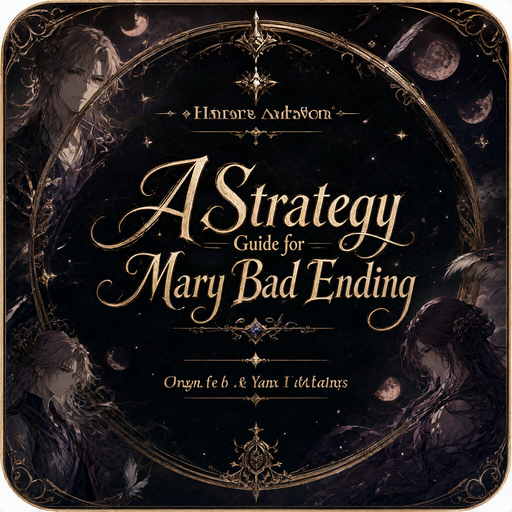
A Strategy Guide for a Mary Bad Ending Endings: All Ending Types, Story Routes, and Choices Explained
Understanding A Strategy Guide for a Mary Bad Ending endings is essential for following the mysterious dating simulation, exploring romantic relationships,...
Understanding A Strategy Guide for a Mary Bad Ending endings is essential for following the mysterious dating simulation, exploring romantic relationships, and recognizing the consequences of important narrative decisions. From potentially happy conclusions to tragic romantic outcomes, the ending system represents one of the most intriguing aspects of the story.
A Strategy Guide for a Mary Bad Ending, alternatively known as Strategy Guide for a Merry Bad Ending, is a Korean romance fantasy manhwa adapted from a web novel by Pretia, with artwork by KANG Seah. The story follows Seo Jia as she becomes involved in a mysterious virtual dating simulation connected to an ancient Hittite-inspired kingdom.
Unlike a commercially released dating simulation, the game exists within the manhwa's fictional universe. Therefore, this endings guide focuses on narrative possibilities, relationship developments, potential ending conditions, and story interpretation rather than confirmed playable mechanics.
Readers should note that a complete official ending list and the exact requirements for unlocking individual endings have not been verified.
All Ending Types in A Strategy Guide for a Mary Bad Ending
The concept of multiple endings is central to understanding the dating simulation presented throughout the story. Different romantic developments, character motivations, and narrative conflicts may influence how Seo Jia's journey concludes.
The following table explains potential ending categories commonly associated with the story's dating simulation framework. These categories are interpretive rather than officially confirmed endings.
| Ending Type | Potential Outcome | Main Narrative Focus | Status |
|---|---|---|---|
| Happy Ending | Positive romantic resolution | Love and mutual trust | Unconfirmed |
| Bad Ending | Tragic or unfavorable conclusion | Conflict and consequences | Unconfirmed |
| Merry Bad Ending | Happiness combined with tragedy | Obsession and sacrifice | Thematic concept |
| True Ending | Resolution of the central mystery | Truth and discovery | Unconfirmed |
| Secret Ending | Unexpected narrative conclusion | Hidden information | Unconfirmed |
| Neutral Ending | Partially resolved relationships | Compromise and uncertainty | Unconfirmed |
Happy Ending
A potential happy ending would involve Seo Jia achieving a favorable resolution while overcoming the dangers surrounding the fictional dating simulation.
Possible narrative indicators include:
- Developing genuine romantic relationships.
- Resolving misunderstandings between characters.
- Discovering important information about the kingdom.
- Maintaining personal independence.
- Overcoming major narrative conflicts.
However, romantic success alone may not necessarily guarantee a happy conclusion within a dark fantasy setting.
Bad Ending
A bad ending generally represents an unfavorable outcome resulting from unresolved conflicts, dangerous relationships, or tragic circumstances.
Readers should pay attention to warning signs involving manipulation, betrayal, hidden motivations, and decisions that limit Seo Jia's freedom.
Merry Bad Ending
The merry bad ending is particularly important because of its connection to the alternative English title of the work.
In narrative fiction, a merry bad ending describes a conclusion that appears happy from one character's perspective but tragic, disturbing, or morally ambiguous from another perspective.
For example, a romantic relationship might reach an apparently satisfying conclusion while involving significant personal sacrifice or a loss of freedom.
This interpretation should not be confused with a confirmed final ending for the manhwa.
How Ending Routes and Choices May Work
Although A Strategy Guide for a Mary Bad Ending does not have a publicly available playable version, its fictional dating simulation provides a useful framework for understanding narrative progression.
Readers can examine how Seo Jia's decisions influence relationships, access to information, and potential story outcomes.
Relationship Development
Romantic relationships represent an important element of the dating simulation premise.
When following individual character routes, consider the following factors:
- Whether trust develops naturally.
- Whether characters reveal their true intentions.
- Whether romantic affection becomes possessive.
- Whether relationships support Seo Jia's independence.
- Whether character interactions introduce additional dangers.
A seemingly positive relationship can still contribute to an unfavorable narrative outcome if important conflicts remain unresolved.
Story Choices
Important decisions may serve as narrative turning points.
These could include choosing whom to trust, deciding whether to investigate suspicious circumstances, responding to romantic advances, or determining how to handle conflicting interests.
No verified list of selectable dialogue options, numerical affection requirements, or branching decision trees is currently available.
Hidden Information
Secrets surrounding the virtual dating simulation and the ancient kingdom may be especially important when interpreting possible endings.
Readers should monitor recurring mysteries, unusual character behavior, unexplained events, and information that contradicts earlier assumptions.
Such details may provide clues about future developments without necessarily confirming a specific ending.
How to Identify Potential Ending Conditions
There is no confirmed ending-unlock menu, save system, or interactive route selection available to readers. Nevertheless, following a structured approach can make the story's possible outcomes easier to understand.
Step 1: Follow the Main Story
Read chapters in chronological order to establish the central conflicts, understand Seo Jia's circumstances, and recognize important changes in the fictional simulation.
Skipping chapters may cause readers to overlook information that becomes significant later.
Step 2: Track Character Relationships
Record major relationship developments, including changes in trust, romantic interest, conflicts, promises, and revelations.
Compare what characters say with how they behave. Differences between their stated intentions and actual actions may provide valuable narrative clues.
Step 3: Identify Major Turning Points
Pay attention to decisions and events that significantly alter Seo Jia's circumstances.
A turning point might involve discovering a secret, changing an alliance, confronting a dangerous situation, or reconsidering an established relationship.
These events can help readers understand which potential outcomes become more or less plausible.
Step 4: Separate Evidence From Theories
Not every mysterious event confirms a hidden route or secret ending.
Distinguish between information explicitly revealed in the manhwa, interpretations supported by multiple chapters, and speculative community theories.
This distinction is particularly important when comparing possible endings with material from the original novel.
Step 5: Follow Official Chapter Updates
The manhwa's official publication platform is RIDI, according to the supplied publication information.
New chapters may reveal additional character motivations, clarify previous mysteries, or change how readers interpret potential conclusions.
Until an ending is explicitly depicted or officially documented, its exact conditions should remain unconfirmed.
Best Ending Strategy and Common Mistakes
When analyzing A Strategy Guide for a Mary Bad Ending endings, the most effective approach is to prioritize narrative evidence rather than treating the fictional simulation as a conventional dating game.
| Strategy | Purpose | Priority |
|---|---|---|
| Follow character motivations | Understand romantic consequences | Very High |
| Investigate recurring mysteries | Identify potential ending clues | Very High |
| Track important decisions | Recognize narrative turning points | High |
| Compare relationship developments | Evaluate possible conclusions | High |
| Follow official chapters | Obtain reliable story information | High |
| Review fan theories | Explore alternative interpretations | Optional |
One common mistake is assuming that the most affectionate character automatically represents the best ending route. Romantic affection may coexist with manipulation, conflicting interests, or dangerous intentions.
Another mistake is treating speculative ending names as officially established conclusions. Terms such as True Ending and Secret Ending can be useful for discussing narrative possibilities, but they should not be presented as confirmed unlockable outcomes.
Finally, avoid assuming that the original novel and its manhwa adaptation necessarily present every event or resolution identically. Any differences should be documented only after consulting the relevant published material.
The best approach is to follow Seo Jia's development, examine the consequences of her decisions, and evaluate romantic outcomes alongside the larger mystery surrounding the dating simulation.
Frequently Asked Questions
How many endings are in A Strategy Guide for a Mary Bad Ending?
The total number of official endings has not been verified. Happy Ending, Bad Ending, Merry Bad Ending, True Ending, and Secret Ending are useful narrative categories, but they are not a confirmed list of unlockable endings.
How do you unlock the true ending in A Strategy Guide for a Mary Bad Ending?
There is currently no verified method for unlocking a true ending. The dating simulation exists within the manhwa rather than as a publicly released game. Readers can follow character relationships, important decisions, and hidden story details to understand potential conclusions.
What does the merry bad ending mean?
A merry bad ending describes a conclusion that may appear happy to certain characters while remaining tragic or morally troubling from another perspective. It is especially relevant to dark romance fiction, where love, obsession, sacrifice, and happiness can exist alongside unfavorable consequences. Its precise application to the final story remains unconfirmed.
Related Guides
A Strategy Guide for a Mary Bad Ending Achievements: Story Milestones, Hidden Objectives, and Completion Guide
Looking for a complete list of A Strategy Guide for a Mary Bad Ending achievements? Understanding story milestones, character relationships, hidden...
A Strategy Guide for a Mary Bad Ending Bad Ending: Dangerous Choices, Romance Routes, and Ending Requirements
Understanding the A Strategy Guide for a Mary Bad Ending bad ending is essential for exploring the mysterious dating simulation, recognizing dangerous...
A Strategy Guide for a Mary Bad Ending Best Characters: Character Rankings, Romance Routes, and Story Choices
Discovering the best characters in A Strategy Guide for a Mary Bad Ending is an important part of understanding its romantic relationships, mysterious...
A Strategy Guide for a Mary Bad Ending Character Guide: Profiles, Relationships, and Story Routes
This A Strategy Guide for a Mary Bad Ending character guide explores the central protagonist, romantic interests, character relationships, and narrative...